
Research Library
The Science on Gambling Harm
The gambling industry spends millions telling you gambling is harmless entertainment. Decades of peer-reviewed research tells a different story. Every study below is real, published, and available to the public.
Filter by topic
24 studies · Updated October 2026
Economic Impact
What Nebraskans Lose to Gambling
Estimated annual consumer gambling losses in Nebraska from 1950 to 2026 — broken out by era. Figures derived from state tax revenue records using Nebraska's statutory 20% tax rate on net gambling proceeds. Toggle eras on or off to compare.
$340M+
Est. 2023 Consumer Loss
Based on NRGC tax receipts
$475M
Projected 2026 Loss
Before online sports wagering
$7.1B
75-Year Cumulative Est.
All forms, 1950–2026
3.4×
Growth Since Casinos
2021 → 2024 consumer losses
Estimated Consumer Losses ($ Millions) · 1950–2026
Estimated Consumer Losses — Recent Years
* Estimated | Solid bars = reported figures | Faded bars = estimates
Data Accuracy Disclaimer
All figures on this chart should be considered estimates only. Consumer loss figures are derived by dividing publicly reported state gambling tax revenues by Nebraska's statutory 20% tax rate on net gambling proceeds. This methodology has significant limitations:
- Pre-1986 (horse racing era): Nebraska authorized pari-mutuel horse racing in 1934. Records from this era are extremely sparse. Figures shown are conservative estimates constructed from fragmentary NE Department of Revenue historical summaries and are highly uncertain.
- 1986–2021 (lottery era): Nebraska did not operate licensed casinos before 2022; data reflects lottery, keno, and pari-mutuel horse racing only. Comprehensive statewide records are incomplete, and the 20% casino tax rate does not apply uniformly to lottery or keno proceeds.
- 2022–2026 (casino era): Licensed casino figures are from NRGC published annual reports. 2025–2026 are projections based on NRGC growth trends and do not account for potential passage of Initiatives 440 & 441, which would add online sports wagering and dramatically increase these figures.
- Illegal and unregulated gambling — including offshore online wagering — is not captured in any state tax record and may represent a substantial additional loss in all eras.
- This data has not been independently audited. It is presented for educational and advocacy purposes only and should not be cited as authoritative financial data. Readers are encouraged to consult the Nebraska Racing and Gaming Commission and the Nebraska Department of Revenue for official figures.
Sources: Nebraska Racing and Gaming Commission Annual Reports (2022–2024); Nebraska Lottery Annual Reports; Nebraska Department of Revenue gaming tax records; American Gaming Association State of the States reports. Pre-2022 estimates constructed by Gambling With The Good Life from available partial records. Chart updated October 2026.
The National Landscape
Where Gambling Is Legal — and Where States Have Drawn the Line
How far has legal gambling spread, and how many states have still refused it? These two maps put Nebraska's fight in national context. The industry has pushed legalization into most of the country — but a determined group of states, Nebraska among them, has kept online sports betting out.
Casino Gambling Across America
Twenty-five states allow commercial casinos, seventeen more host tribal casinos on sovereign land, and eight states still have no casinos at all. Nebraska's first casinos opened in 2023 — which is exactly why the research on this page matters here at home.
Only Hawaii outlaws gambling entirely; Utah bans it in its state constitution. Just five states — Alabama, Alaska, Hawaii, Nevada, and Utah — sell no lottery tickets.
Online Sports Betting: The 20 States That Held the Line
Online sports betting is live in 30 states and Washington, D.C. Nine more allow only in-person sportsbooks, and eleven — including California and Texas — have no legal sports betting at all. Nebraska is still a state where you cannot place a bet from your phone: exactly the expansion Nebraska voters rejected on November 3, 2026.
Montana permits online wagering only inside licensed gaming facilities. Nebraska, Delaware, Mississippi, New Mexico, North Dakota, South Dakota, Washington, and Wisconsin limit betting to physical sportsbooks.
State classifications verified November 2026 from published state gaming records and legalization histories. State laws change — confirm current law with your state's gaming commission.
Family Breakdown
Divorce and the Gambling Family
When researchers study pathological gambling, marriage breakdown is one of the most consistent findings — the clinical evidence is stark. But state divorce statistics can't show it, because no divorce record asks whether gambling was a cause. Here is both sides of the record: what the clinical research says, and what Nebraska and Iowa's official numbers actually show.
Written Into the Diagnosis
The DSM-5 — psychiatry's official diagnostic manual — lists "has jeopardized or lost a significant relationship, job, education, or career opportunity because of gambling" among the nine criteria for gambling disorder. A person meeting just four within twelve months receives the diagnosis.
American Psychiatric Association, DSM-5 (2013)
A Documented Cost
The Australian Productivity Commission's landmark government study counts relationship breakdown among the documented costs of problem gambling — alongside depression, suicide, job loss, crime, and bankruptcy. That is not advocacy language; it is the finding of a national economic inquiry.
Australian Productivity Commission, Gambling report (2010)
Why Statewide Averages Hide It
State divorce records don't record a cause. Gambling's toll on marriage is concentrated in the small share of households affected by gambling disorder — which is why the evidence lives in clinical studies of problem gamblers, not in a state's overall vital statistics.
Honest data note
Nebraska and Iowa Divorce Rates, 1990–2019
The official record: divorces per 1,000 residents in Nebraska and Iowa, from the earliest complete federal state series through the most recent comparable year. Both states' rates fell steadily across three decades — before Nebraska's first casino ever opened.
Nebraska's divorce rate has not risen in the casino era — and that is exactly the point. Statewide averages never were where gambling's family toll shows up. It shows up in the households and clinical populations the cards above describe.
Divorce rates from the National Center for Health Statistics (CDC), "Divorce rates by State: 1990, 1995, and 1999–2019" — rates per 1,000 population, including annulments. Years shown are those with complete filings for both states.
About This Data
Where This Data Comes From — and What It Can't Tell You
We hold ourselves to a standard the gambling industry doesn't: every number we publish is verified against a public source before it appears on this page. That standard has a cost. Some of the harm trends people ask about most — homelessness, foreclosure, bankruptcy, crime — can't be charted at the state level, and the reasons why are worth understanding.
No gambling checkbox in official records
No bankruptcy filing, divorce decree, police report, or foreclosure record asks whether gambling caused the harm. Officials have never systematically gathered that information. Gambling's share of these problems is measured only in clinical studies of problem gamblers — which is why the strongest evidence on this page comes from peer-reviewed research, not state statistics.
Tracking began late
Federal homelessness counts by state begin in 2007, statewide foreclosure tracking begins around 2005, and older bankruptcy tables survive only as scanned documents and spreadsheet downloads. A chart of Nebraska homelessness going back to the 1990s cannot exist, because the state and federal governments did not count it that far back — not because we chose not to.
Some records are locked behind paywalls
The most detailed foreclosure and property-transaction records are compiled and sold by commercial data companies rather than published by any public agency. We won't pay a data broker to make an argument — and we won't reprint figures we can't independently verify from a public source.
What we chart — and what we won't
Every figure, chart, and study on this page carries its source, and we have checked each one. Where a university research center produced a study, we name the university, so you can trace every claim back to the institution behind it. Where a data series is missing, outdated, or unverifiable, we say so plainly instead of filling the gap with a guess. If we ever get it wrong, we will correct the record.
Staggered Timelines
The Harm Trends, Charted Where the Data Begins
These lines don't all start in the same year — and that's deliberate. Each chart begins in the first year its official record exists: crime data reach back to 1990, homelessness counts to 2007, and the federal judiciary's district tables to 2016. Showing each series at its true starting point is more honest than trimming them all to match. Every point below was verified against a published public source.
Violent Crime in Nebraska and Iowa, 1990–2025
Both states' violent crime rates have fallen more than 20% since their early-1990s peaks, and the solid lines end in 2019 — the last year the FBI's original counting system existed. The dotted lines are a different measurement: from 2020, states report through the new incident-based (NIBRS) system, and the numbers are not directly comparable to what came before. Read each segment separately. Nebraska's 2021–2022 totals exclude Omaha — the state's largest police department did not report during the switch — and its return in 2024 is why Nebraska's dotted line rises.
Homelessness in Nebraska and Iowa, 2007–2019
HUD's official count of every person experiencing homelessness on a single January night, state by state. Nebraska's count fell from 3,531 in 2007 to 2,365 in 2019; Iowa's from 2,734 to 2,315. This is the only state-level homelessness series that exists — HUD did not count states before 2007.
Bankruptcy Filings in Nebraska and Iowa, Fiscal 2016–2025
Every bankruptcy case commenced in the District of Nebraska and in Iowa's Northern and Southern federal districts. Filings collapsed during the pandemic and have been climbing back since 2022 — the year Nebraska's first casino opened, marked by the vertical line. Watch this line as Nebraska's casinos mature.
What about foreclosure?
State-level foreclosure counts are compiled and sold by commercial data companies; no public agency publishes a verifiable Nebraska or Iowa series we can chart. We won't buy data from a broker to make an argument, and we won't reprint figures we can't check against a public source. When a public series exists, this chart will appear.
Taxpayer burden
The Policing Bill No One Is Tracking
Nebraska's four commercial casinos operate inside Lincoln, Omaha, Grand Island, and Columbus. Each one generates 911 calls — assaults, disturbances, thefts, welfare checks, impaired driving — but almost none of that activity shows up anywhere the public can audit. Casino floors are private property patrolled first by private security, and no state agency or city police department publishes a count of how many times taxpayers' police officers, medics, and jail beds answer a casino's calls.
We looked. There is no Nebraska state or local dashboard that breaks police response out by address, let alone by casino. The industry pays for private security on its side of the door; the public pays for everything that spills past it — and no one in state government totals that bill.
So we are doing what the agencies have not: asking for the records directly. Nebraska's Public Records Act (Neb. Rev. Stat. § 84-712 et seq.) entitles any citizen to request them. Below you'll find a ready-to-send records request for each city's police department, plus an estimator you can use in the meantime. We publish no invented numbers — every figure on this page comes from a record someone has to produce.
Estimate the Dispatch Bill Yourself
Enter a call count and a per-call cost — the two figures our records requests ask each department to confirm — and see what a year of casino calls could cost the city that hosts them.
WarHorse Casino Lincoln
Lincoln, Nebraska
WarHorse Casino Omaha
Omaha, Nebraska
Grand Island Casino Resort at Fonner Park
Grand Island, Nebraska
Harrah's Columbus
Columbus, Nebraska
This is an estimator, not data. Every number on this chart is one you enter. We publish no invented figures because none exist publicly — the bars fill in as you type. When departments answer the records requests below, verified counts and costs replace this tool.
Where do the inputs come from? The records requests below ask each department for its own call counts and cost-per-call figures — the same numbers a city budget office would need to answer one question: how much does hosting a casino cost the police budget? Until those answers arrive, this chart is a blank grid, and that blank is the point.
Four Letters, Four Cities
Neb. Rev. Stat. § 84-712 et seq.Each letter below is ready to copy and send — by mail or through the department's public-records channel — to the custodian of records. Replace the bracketed fields with your own name and contact information. If a department stalls or refuses, Nebraska law sets deadlines and fee limits for these responses, and a stall is itself worth reporting.
Lincoln Police Department
Lincoln, Nebraska
Suggested subject line: Public records request — calls for service at WarHorse Casino Lincoln
[Date]

Records Custodian
Lincoln Police Department
Lincoln, Nebraska

RE: Request for public records under the Nebraska Public Records Act, Neb. Rev. Stat. § 84-712 et seq.

Dear Records Custodian:

Under the Nebraska Public Records Act, I request copies of the following public records for the period from the opening of WarHorse Casino Lincoln to the present:

1. The total number of calls for service associated with WarHorse Casino Lincoln, for each calendar year since it opened, in total and by priority or incident type where available.

2. Incident-type counts for those calls — for example: assault, disturbance, theft, welfare check, overdose, DUI, or fraud.

3. The total number of officer or dispatcher hours expended on those calls, where recorded.

4. Any document reflecting the department's average cost per call for service, or the methodology it uses to calculate staffing, dispatch, or jail costs per call.

5. Any records of amounts charged to, billed to, or recovered from WarHorse Gaming LLC or its affiliates for police services.

If any portion of this request is denied, please cite the specific statutory exemption relied upon. I am willing to pay reasonable copying fees; please notify me in advance if fees will apply.

This request is made in my capacity as a member of the public. Please respond within the period required by statute.

Sincerely,
[Name]
[Street address]
[City, Nebraska ZIP]
[Email / phone]
Omaha Police Department
Omaha, Nebraska
Suggested subject line: Public records request — calls for service at WarHorse Casino Omaha
[Date]

Records Custodian
Omaha Police Department
Omaha, Nebraska

RE: Request for public records under the Nebraska Public Records Act, Neb. Rev. Stat. § 84-712 et seq.

Dear Records Custodian:

Under the Nebraska Public Records Act, I request copies of the following public records for the period from the opening of WarHorse Casino Omaha to the present:

1. The total number of calls for service associated with WarHorse Casino Omaha, for each calendar year since it opened, in total and by priority or incident type where available.

2. Incident-type counts for those calls — for example: assault, disturbance, theft, welfare check, overdose, DUI, or fraud.

3. The total number of officer or dispatcher hours expended on those calls, where recorded.

4. Any document reflecting the department's average cost per call for service, or the methodology it uses to calculate staffing, dispatch, or jail costs per call.

5. Any records of amounts charged to, billed to, or recovered from WarHorse Gaming LLC or its affiliates for police services.

If any portion of this request is denied, please cite the specific statutory exemption relied upon. I am willing to pay reasonable copying fees; please notify me in advance if fees will apply.

This request is made in my capacity as a member of the public. Please respond within the period required by statute.

Sincerely,
[Name]
[Street address]
[City, Nebraska ZIP]
[Email / phone]
Grand Island Police Department
Grand Island, Nebraska
Suggested subject line: Public records request — calls for service at Grand Island Casino Resort
[Date]

Records Custodian
Grand Island Police Department
Grand Island, Nebraska

RE: Request for public records under the Nebraska Public Records Act, Neb. Rev. Stat. § 84-712 et seq.

Dear Records Custodian:

Under the Nebraska Public Records Act, I request copies of the following public records for the period from the opening of Grand Island Casino Resort at Fonner Park to the present:

1. The total number of calls for service associated with Grand Island Casino Resort at Fonner Park, for each calendar year since it opened, in total and by priority or incident type where available.

2. Incident-type counts for those calls — for example: assault, disturbance, theft, welfare check, overdose, DUI, or fraud.

3. The total number of officer or dispatcher hours expended on those calls, where recorded.

4. Any document reflecting the department's average cost per call for service, or the methodology it uses to calculate staffing, dispatch, or jail costs per call.

5. Any records of amounts charged to, billed to, or recovered from the casino's operator or its affiliates for police services.

If any portion of this request is denied, please cite the specific statutory exemption relied upon. I am willing to pay reasonable copying fees; please notify me in advance if fees will apply.

This request is made in my capacity as a member of the public. Please respond within the period required by statute.

Sincerely,
[Name]
[Street address]
[City, Nebraska ZIP]
[Email / phone]
Columbus Police Department
Columbus, Nebraska
Suggested subject line: Public records request — calls for service at Harrah's Columbus
[Date]

Records Custodian
Columbus Police Department
Columbus, Nebraska

RE: Request for public records under the Nebraska Public Records Act, Neb. Rev. Stat. § 84-712 et seq.

Dear Records Custodian:

Under the Nebraska Public Records Act, I request copies of the following public records for the period from the opening of Harrah's Columbus to the present:

1. The total number of calls for service associated with Harrah's Columbus, for each calendar year since it opened, in total and by priority or incident type where available.

2. Incident-type counts for those calls — for example: assault, disturbance, theft, welfare check, overdose, DUI, or fraud.

3. The total number of officer or dispatcher hours expended on those calls, where recorded.

4. Any document reflecting the department's average cost per call for service, or the methodology it uses to calculate staffing, dispatch, or jail costs per call.

5. Any records of amounts charged to, billed to, or recovered from Caesars Entertainment or its affiliates for police services.

If any portion of this request is denied, please cite the specific statutory exemption relied upon. I am willing to pay reasonable copying fees; please notify me in advance if fees will apply.

This request is made in my capacity as a member of the public. Please respond within the period required by statute.

Sincerely,
[Name]
[Street address]
[City, Nebraska ZIP]
[Email / phone]
When the Numbers Come Back
Every response we receive gets published here — call counts, costs, and the letters that produced them. If a department refuses, the refusal gets published too. Nebraskans are subsidizing casino security with their own police departments, and they deserve to see the bill.
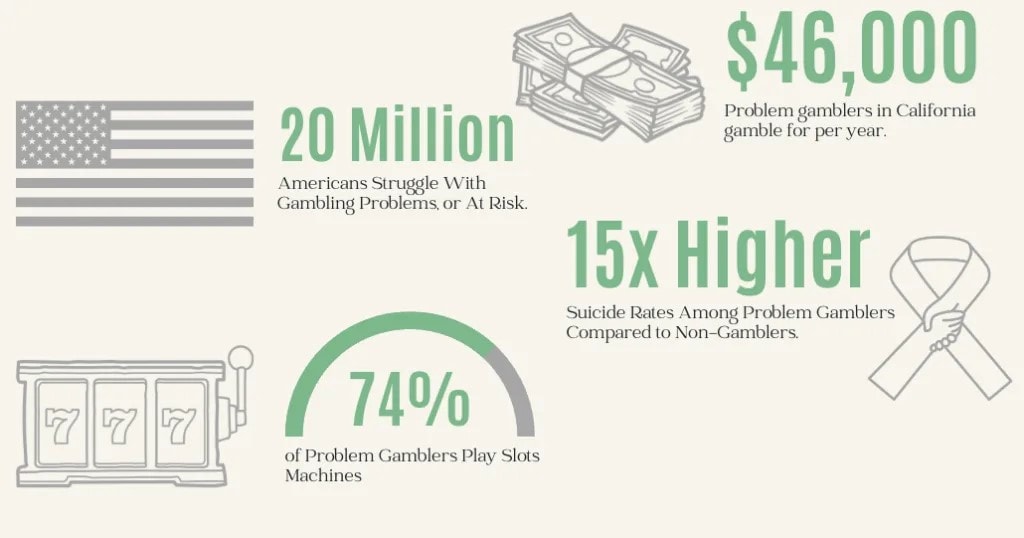
By the Numbers
Share the Research
Help Nebraskans see the science. Share this research library with friends, family, and lawmakers.
The Research Is Clear. Nebraska Deserves Better.
Share this research with your state senator, your community, and your family. Knowledge is the most powerful tool we have against the gambling industry.
Nebraska Problem Gambling Helpline: 1-800-522-4700